
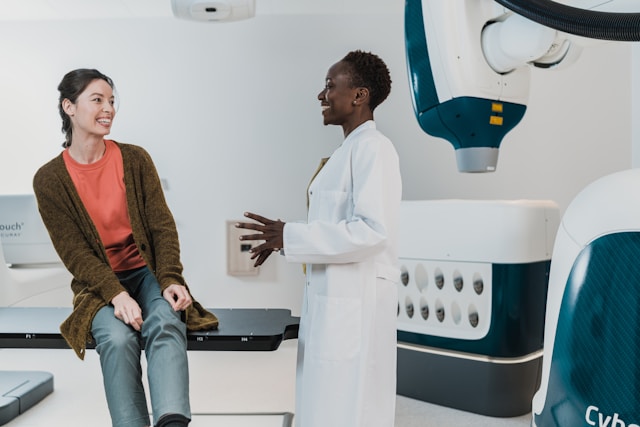
Bleeding patterns can change across your life, but you should not have to guess what is normal or silently endure heavy, prolonged, or unpredictable periods. Abnormal uterine bleeding is common and treatable, and most causes are not dangerous once identified.
If your periods are disrupting work, sleep, intimacy, or daily routines, there are options to help. This guide explains what counts as abnormal, the most frequent causes, how gynecologists diagnose the issue, and the full spectrum of treatments from medication to in-office procedures and surgical solutions when needed.
At OBGYN Specialists of Columbus, we focus on privacy, comfort, and shared decision-making. You will never be rushed into a plan. You will understand your choices.
What counts as abnormal uterine bleeding
Typical menstrual cycles come every 21 to 35 days, last about 2 to 7 days, and involve a total blood loss around 30 to 80 milliliters. Bleeding is considered abnormal when it is heavier, longer, more frequent, or more widely spaced than expected, or when it occurs between periods or after sex.
Common red flags include:
- Soaking through a pad or tampon every hour for several hours
- Passing clots larger than a quarter
- Bleeding that lasts longer than 7 days or returns more often than every 21 days
- Needing to double up on protection or changing protection overnight
- Any bleeding after menopause
Seek urgent care if you feel lightheaded, short of breath, or if bleeding is severe enough to soak a pad hourly, especially with large clots.
The most common causes of AUB
Abnormal uterine bleeding (AUB) has many causes. Some are structural changes in the uterus, others are hormonal or related to systemic conditions. The most frequent include:
- Fibroids. Benign uterine muscle growths that can cause heavy or prolonged periods, pelvic pressure, and anemia.
- Polyps. Small, usually benign tissue overgrowths in the uterine lining that may cause spotting between periods or after sex, as well as heavier flow.
- Hormonal imbalance. Anovulation or irregular ovulation can lead to a thickened lining that sheds unpredictably and heavily. This is common in adolescence and perimenopause.
- Thyroid disorders. Both hypothyroidism and hyperthyroidism can disrupt cycles.
- Perimenopause. Fluctuating estrogen and progesterone in the years before menopause often cause cycle changes, including heavier or erratic bleeding.
- Bleeding disorders and medications. Platelet disorders, anticoagulants, and some supplements can increase bleeding.
- Less common but important. Endometrial hyperplasia, endometritis, and rarely endometrial cancer, particularly after age 45 or with risk factors.
When to worry about heavy periods
Heavy periods deserve attention anytime they limit your life or cause symptoms of anemia such as fatigue, dizziness, or headaches. You should schedule a visit if:
- You soak through protection hourly for more than a couple of hours
- Bleeding lasts longer than 7 days
- You pass clots larger than a quarter
- You are bleeding after sex or between periods
- You have bleeding after menopause
A single very heavy day can happen, but persistent changes or severe episodes should be evaluated.
How AUB is diagnosed
A thoughtful evaluation starts with listening. Your clinician will ask about timing, flow, clots, pain, contraception, pregnancy history, medications, and family history. From there, testing is tailored to your situation and may include:
- Pelvic exam. Assesses the cervix, uterus, and any tenderness or masses.
- Pregnancy test. Important for anyone who could be pregnant.
- Bloodwork. Complete blood count to check for anemia; iron studies; thyroid-stimulating hormone to screen for thyroid disease; and sometimes hormone tests based on symptoms and life stage.
- Pelvic ultrasound. First-line imaging to look for fibroids, polyps, ovarian cysts, and to assess the uterine lining.
- Endometrial biopsy. A brief in-office test that samples the uterine lining to rule out hyperplasia or cancer, typically recommended for patients 45 and older or younger patients with risk factors or persistent bleeding.
- Additional studies when indicated. Saline infusion sonohysterography to better visualize the cavity, or hysteroscopy to see and treat issues inside the uterus.
Many of these steps can be completed in the clinic for convenience and privacy.
Treatment options, from simplest to more targeted
Your plan is individualized based on the cause, your goals, and whether you wish to preserve fertility. Treatments often start conservatively and step up only if needed.
- Medications. Nonsteroidal anti-inflammatories can reduce flow and cramps when taken at the start of menses. Hormonal options include combined oral contraceptives, progesterone-only methods, cyclic progestins, and the levonorgestrel intrauterine device, which often reduces bleeding substantially. Iron supplementation helps correct anemia when present.
- Addressing underlying conditions. Treating thyroid disorders, optimizing weight and insulin resistance, or adjusting anticoagulants can stabilize cycles.
- In-office procedures. Office hysteroscopy can remove small polyps. Endometrial biopsy guides next steps and may be both diagnostic and therapeutic in select scenarios.
- Endometrial ablation. For carefully selected patients who have completed childbearing, ablation treats the uterine lining to reduce or stop bleeding. It is not birth control, and pregnancy after ablation is unsafe, so reliable contraception or sterilization is needed afterward. Ablation does not treat large fibroids, but it can be a good option for heavy bleeding when imaging and biopsy are reassuring.
- Surgery when appropriate. Hysteroscopic polypectomy or myomectomy can remove cavity polyps or submucosal fibroids that drive bleeding. Laparoscopic approaches are often used to address larger fibroids or other pelvic pathology with smaller incisions and typically faster recovery. Hysterectomy is definitive for bleeding that does not respond to other treatments or when multiple uterine problems coexist. Robotic surgery is not currently offered at our practice; we focus on advanced laparoscopic and in-office techniques tailored to your needs.
What endometrial ablation involves
Endometrial ablation is a minimally invasive procedure that destroys the uterine lining to reduce menstrual flow. It is designed for patients who:
- Have heavy periods that affect daily life
- Have benign evaluation (ultrasound and, when indicated, biopsy)
- Do not wish to become pregnant in the future
Many ablations are done as outpatient procedures with brief recovery. Results vary. Some patients have much lighter periods, while others stop bleeding altogether. Cramping and mild discharge are common for a few days. You and your clinician will review benefits, risks, and contraception planning in detail.
If ablation is not the right fit because of fibroid size or location, a different procedure may be recommended.
Privacy, comfort, and what to expect at your visit
Your comfort matters. At your appointment, we review your symptoms and goals in a private setting, explain each test before it happens, and discuss options in plain language. If you need an in-office procedure, we use local anesthesia when appropriate and guide you through what you will feel and how long it will take. You leave with clear aftercare instructions and a direct way to reach us with questions.
If you are due for routine screening, you can combine your AUB evaluation with a well-woman visit and Pap testing when indicated. Learn more about scheduling a well-woman exam in Columbus and Pap testing on our annual exam page.
Quick FAQ
- What is the single most common gynecologic problem? Abnormal uterine bleeding is among the most common reasons people seek gynecologic care, especially heavy or irregular periods across adolescence and perimenopause.
- When should I worry about heavy periods? If you are soaking a pad or tampon each hour for several hours, passing large clots, bleeding longer than 7 days, bleeding between periods or after sex, or bleeding after menopause, schedule an appointment. Seek urgent care if you feel faint or short of breath.
- What tests diagnose AUB? Evaluation usually includes a pelvic exam, pregnancy test, bloodwork to check anemia and thyroid function, pelvic ultrasound, and sometimes an endometrial biopsy. Additional imaging or hysteroscopy may be used when needed.
- What is endometrial ablation and who is it for? It is a minimally invasive treatment that destroys the uterine lining to reduce bleeding. It is intended for patients with heavy periods who have completed childbearing and have a benign evaluation. Reliable contraception is necessary afterward.
- When is surgery the right choice? Surgery is considered when medication and office procedures do not control bleeding, when structural causes like fibroids or polyps are driving symptoms, or when you prefer a definitive option such as hysterectomy after informed discussion.
Gentle next step
You do not have to navigate abnormal bleeding alone. If heavy or unpredictable periods are affecting your life, our team is here to help you find answers and relief with a plan that respects your goals and privacy. To get started, you can read about our minimally invasive gynecology approach, schedule an annual visit and Pap when due, or contact our office to talk through your symptoms and options.
 706.324.0471
 admin@obgynsoc.com

